Matcha vs Green Tea (Sencha): Siblings That Grew Up Differently
Ever wondered why at a Japanese restaurant, the free “Hot Green Tea” and the “Matcha Latte” costing over a hundred baht are different? Both are green, come from the same tea plant, but why are taste, appearance, and price worlds apart?
The truth is, both Matcha and Leaf Green Tea (Green Tea/Sencha) come from the same Camellia sinensis species. But what separates this sibling pair is the “Upbringing” (Cultivation) and “Refinement” (Processing).
This article will take you to deep dive into every difference so next time you stand in front of a tea shop, you can order confidently knowing which cup is right for you.
1. Cultivation Method: Shade vs Sun
This is the most critical turning point determining the tea leaf’s destiny.
- General Green Tea (Sencha): Grows under natural sunlight all its life. Sunlight helps leaves produce antioxidants called “Catechins”, which are very beneficial but come with Astringency. The more sun, the more astringent.
- Matcha: Is the spoiled child raised in a dark room. Farmers build structures or drape nets over tea plants to block 90-95% sunlight for about 3-4 weeks before harvest.
- Lack of sunlight forces tea plants to struggle to photosynthesize by producing increased Chlorophyll (leaves become intensely dark green).
- Importantly, tea plants will accumulate very high amino acid L-Theanine, which is the source of the mellow sweet taste (Umami) and helps reduce astringency.
Summary: General green tea loves sun, tastes astringent fresh. Matcha hides from sun, tastes sweet smooth.
2. Processing: Steam & Roll vs Steam & Grind
Once harvested, their paths diverge completely.
General Green Tea (Sencha)
- Steaming: To stop color changing.
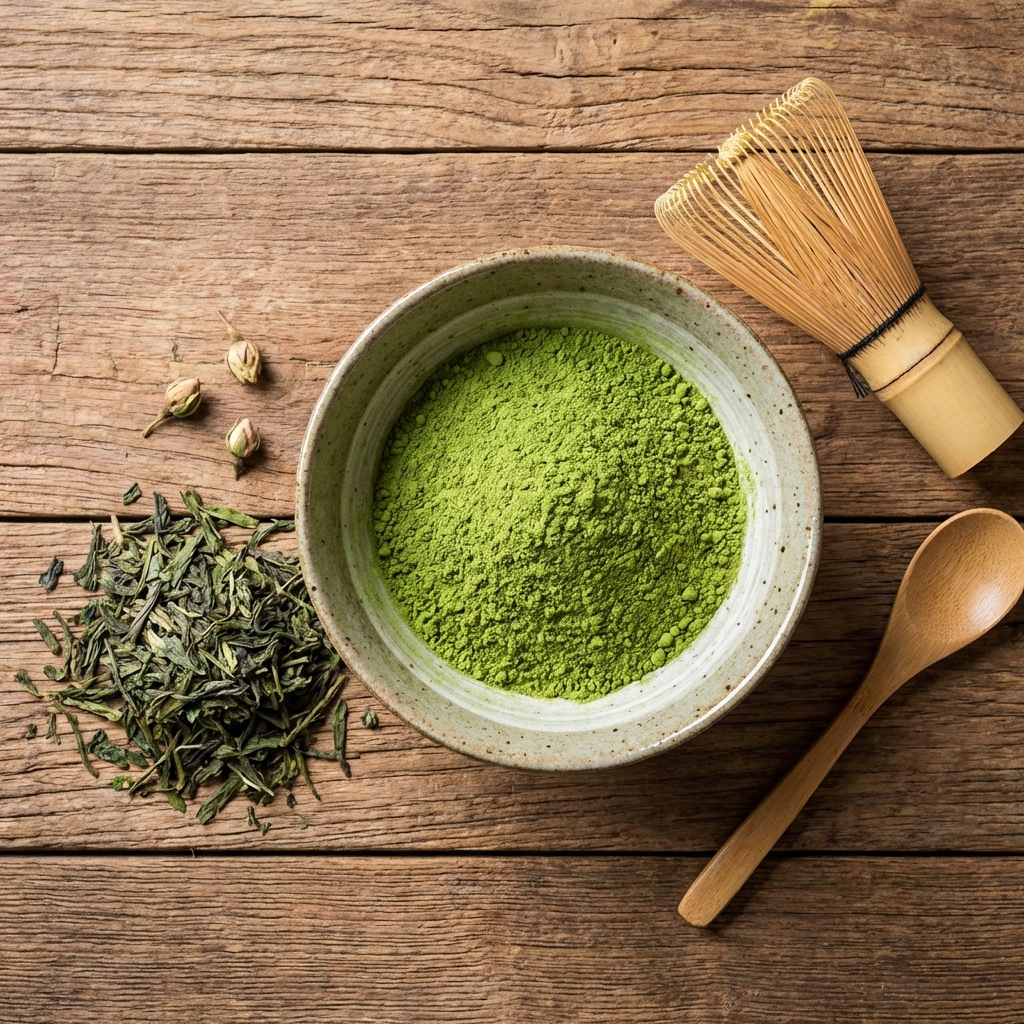
- Rolling: Tea leaves are kneaded into slender needle-like shapes. This process helps squeeze oils and flavors to coat the leaf surface, ready to dissolve when meeting hot water.
- Drying: For preservation.
Matcha
- Steaming: Stop color change as well.
- Drying: But No Rolling! Leaves are spread to dry.
- Destemming: Very important step. Must remove hard stems and leaf veins completely, leaving only pure leaf flesh called Tencha.
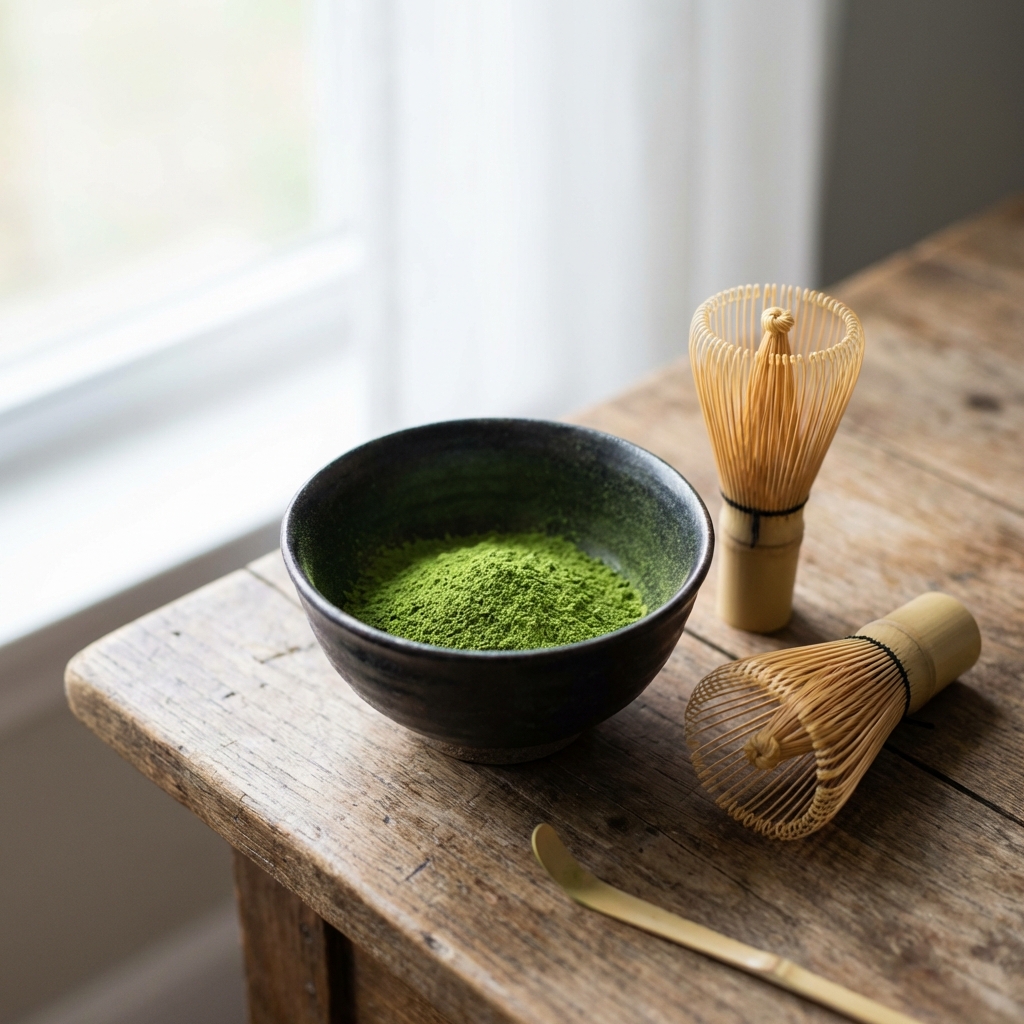
- Stone Grinding: Tencha is ground with granite stone mills slowly until becoming micron-level fine powder.
3. Drinking Method: Infusion vs Suspension
Processing differences directly affect drinking methods.
- General Green Tea: We use Infusion method, soaking leaves in hot water, waiting for flavor and scent to dissolve, then discarding the leaves. We drink only its “extract”.
- Matcha: We use Suspension method, whisking tea powder to disperse in water, then drinking it all, both water and tea flesh. Basically, we eat the whole tea leaf.
4. Taste & Texture
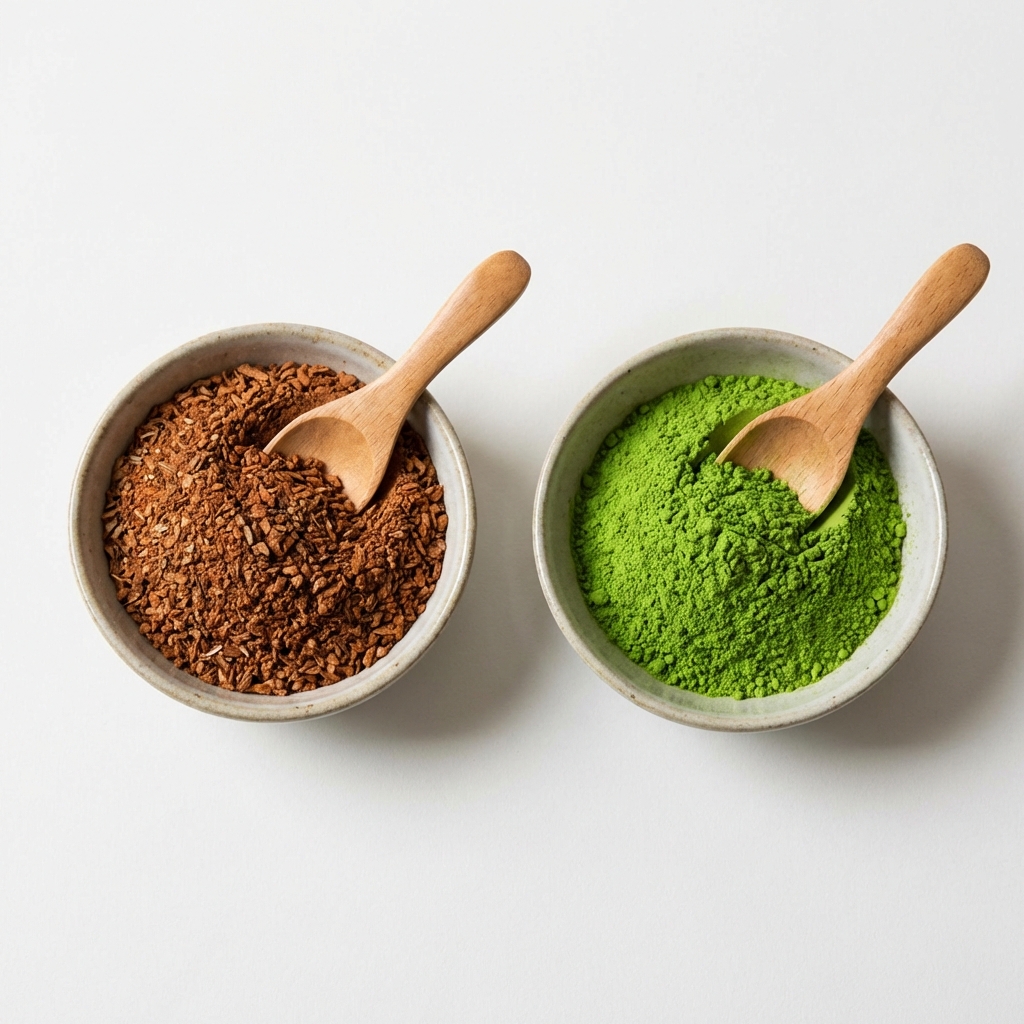
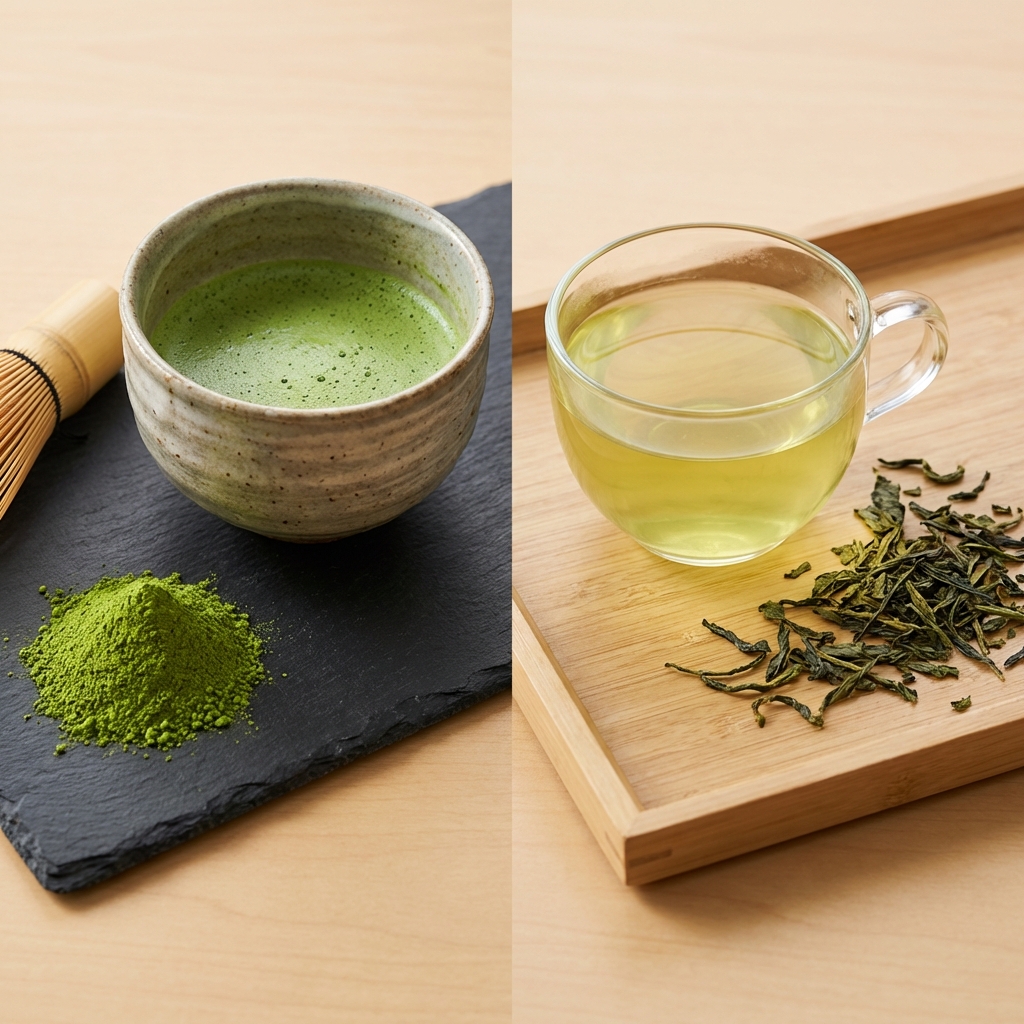
- General Green Tea: Clear water, light yellow-green color. Taste is Light, fresh, smelling of young grass or seaweed. Usually has astringency at the tip of the tongue, which is charming for feeling clean palate.
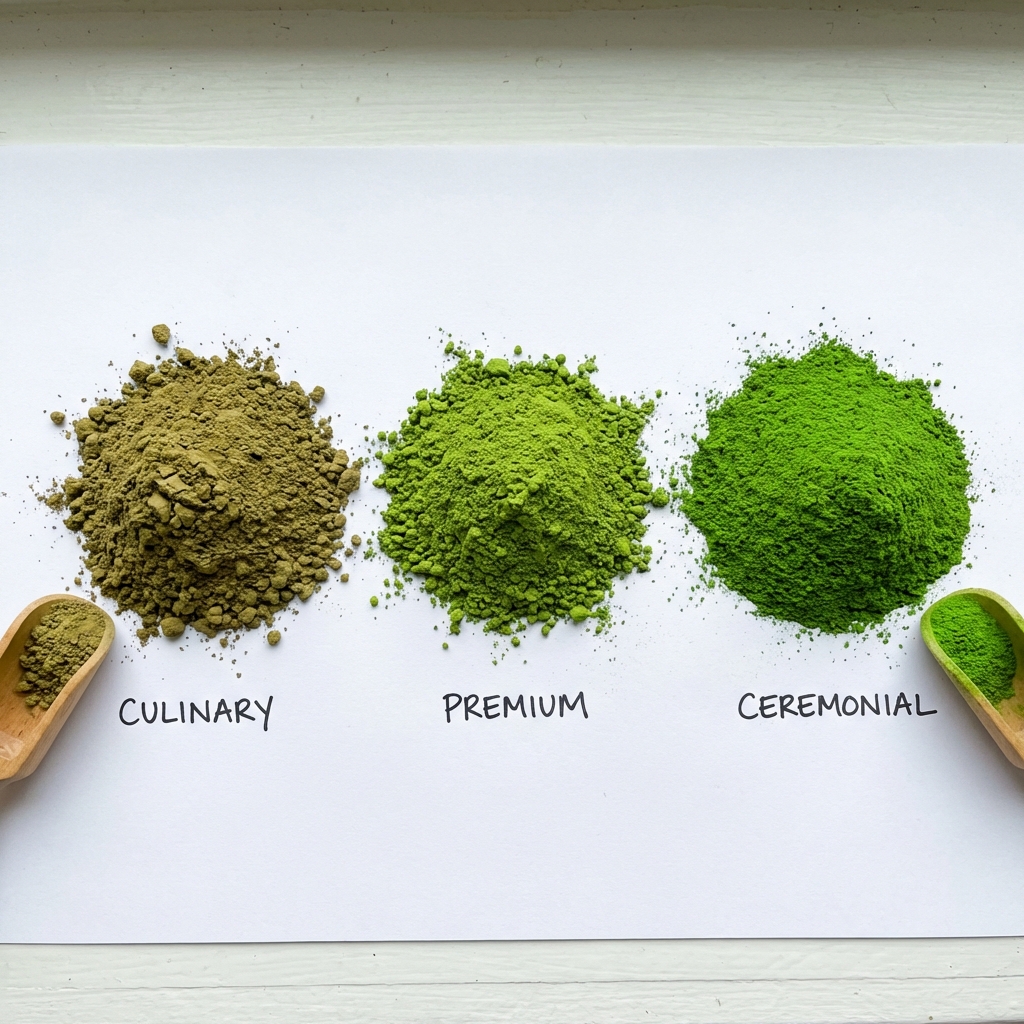
- Matcha: Opaque water. Texture has more Body. Taste is Rich, intense, creamy or nutty (Vegetal & Creamy). Distinct Umami and very little astringency (if good grade). Aroma is deeper.
5. Nutritional Value: 1 Cup Equals 10 Cups?
There is a comparison saying “Drinking 1 cup of Matcha equals benefits of drinking 10 cups of general green tea”. Is it true?
The answer is Quite true in terms of nutrient intake.
Since we eat matcha whole leaf, we get all nutrients, whether vitamins, fiber, and antioxidants that usually might not fully dissolve in hot water.
- Antioxidants (EGCG): Matcha has about 3-10 times higher than general green tea (depending on grade).
- Caffeine: Matcha has much higher caffeine (about 35-70 mg per cup vs 10-20 mg for sencha).
- L-Theanine: Matcha has much higher, aiding concentration and relaxation.
But general green tea has the advantage of being drinkable all day because caffeine is lower, and freshness helps quench thirst better than matcha which might be too heavy for stomach if drunk instead of water.
Summary: Which to Choose?
- Choose General Green Tea (Sencha) If you want freshness, thirst quenching, palate cleansing after meal, or want a light drink during the day that is economical and easy to brew.
- Choose Matcha If you want “Energy” and “Focus”, want intense creamy taste, or want to make milk drinks (Latte) and desserts, including if you are serious about maximum antioxidant intake.
Neither is better, only whether it is “Suitable for that moment” or not. Try opening your mind to drink both, and you will fall in love with the distinct charms of these green tea siblings.
Which team? Fresh Team (Sencha) or Intense Team (Matcha)? Share your favorite menu or favorite tea shop at MatchaFans Community. Friends are waiting to hear delicious coordinates from you!