Matcha Grades Explained: Guide to Choosing the “Right” and “Worth it” One
When ordering a jar of matcha, have you ever stood confused in front of the shelf or screen? What is “Ceremonial Grade”? Why is it so expensive? Can “Culinary Grade” be brewed for drinking? Or is it only for making cakes? And is “Premium Grade” really good or just a fancy name?
Today MatchaFans will unfold the textbook on “Matcha Grades” completely, so you can spend every baht worthily and get the most delicious product for your palate.
The Truth About “Grades” (Must Know!)
First thing to understand is “The word Grade is just a marketing term, not a legal standard”. There is no central organization defining that “This tea must be called Ceremonial only”. So Brand A might call their mid-level tea Ceremonial, while Brand B with higher standards might call that same level tea Premium.
But generally in the tea industry, we broadly divide grades into 2-3 levels based on “Harvest Time” and “Tea Leaf Quality” as follows:
1. Ceremonial Grade
This is the “Queen of Matcha”, the pinnacle of premium.
- Raw Material: Made from the first 3 tea leaves harvested in the First Season of the Year (First Harvest / Ichibancha) only, which is when tea leaves accumulate the most nutrients.
- Characteristics:
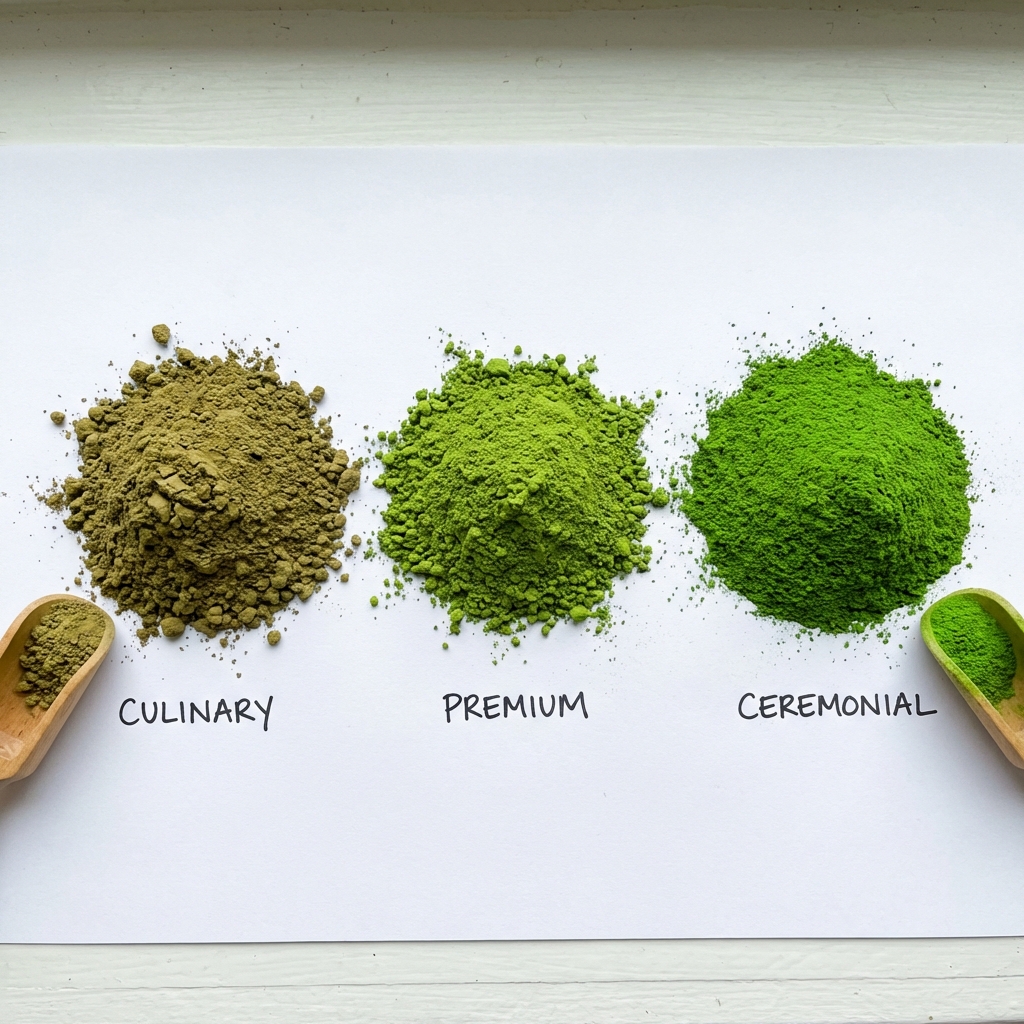
- Color: Fresh, bright vibrant green like jade.
- Texture: Very fine like talcum powder, not clumping hard.
- Aroma: Fresh, deep fragrance.
- Taste: Very high natural sweetness (Umami), almost no bitterness or astringency.
- Usage:
- ✅ Suitable for: Brewing with pure hot water (Usucha) or thick tea (Koicha) to enjoy the authentic taste.
- ❌ Not suitable for: Mixing with milk, sugar, or banking, because delicate flavors will be drowned out (and it’s too expensive for that!).
- Price: High.
2. Premium Grade (Latte Grade)
A perfect hybrid between quality and price. The grade most popular in cafes.
- Raw Material: Might be secondary First Harvest leaves, or Second Harvest.
- Characteristics: Color is still fresh and beautiful, but maybe not as bright as ceremonial grade.
- Taste: More intense than ceremonial grade, slightly bitter (Pleasant bitterness) which is a pro when mixed with milk.
- Usage:
- ✅ Suitable for: Making Matcha Latte (with milk) because the slight bitterness helps the tea flavor “fight” the creaminess of milk perfectly, not too greasy.
- ✅ Suitable for: Cold or blended drinks.
- Price: Medium.
3. Culinary Grade (Kitchen Grade)
The name clearly states it’s for “Cooking”, but it’s not “leftovers”. It is tea designed for this duty.
- Raw Material: Tea leaves from 2nd or 3rd harvest and lower leaves of the tea bush.
- Characteristics:
- Color: Dark green with yellow tint, or slightly olive green. Not bright.
- Aroma: Strong tea smell.
- Taste: Distinct bitter and astringent taste (Strong astringency). Low Umami.
- Usage:
- ✅ Suitable for: Bakery (cakes, cookies), ice cream, or blended drinks with lots of sugar/condensed milk. Because this strong bitterness will cut through the sweetness and creaminess of butter and sugar, making the dessert have a clear “Green Tea” taste. If using ceremonial grade for baking, the tea taste will disappear, becoming just a green colored cake.
- ❌ Not suitable for: Brewing pure to drink (too bitter).
- Price: Economical.
Summary Table: Easy Selection
| Menu to make? | Which Grade? | Why? |
|---|---|---|
| Clear Hot Tea (Usucha) | Ceremonial | Want sweet taste, no bitter, beautiful color, enjoy authentic taste |
| Matcha Latte (with milk) | Premium | Want intensity to fight milk, slight bitter cuts greasiness well |
| Smoothie / Blended | Premium / Culinary | Save budget and taste is still intense enough |
| Cake / Cookies | Culinary | Smell and taste must be strong enough to fight butter/flour/sugar |
| Topping Decoration | Ceremonial / Premium | For beautiful appetizing color (Culinary color won’t be pretty) |
Final Advice
- Don’t look at just grade name: Look at the “Color” of tea powder mainly (if you see the real thing). Fresh green = Good quality.
- Trial and Error: Everyone’s taste buds are different. Some like latte using Ceremonial grade because they like smoothness. Some like Culinary because they like intense bitter tea taste.
- Start with Premium: If a beginner, recommend starting buying Premium Grade because it’s most flexible. Can brew with water ok, with milk delicious, price not painful.
Have a favorite matcha brand in mind yet? If not, try looking at reviews and advice from friends in MatchaFans Community. Lots of shop coordinates and hit brands!