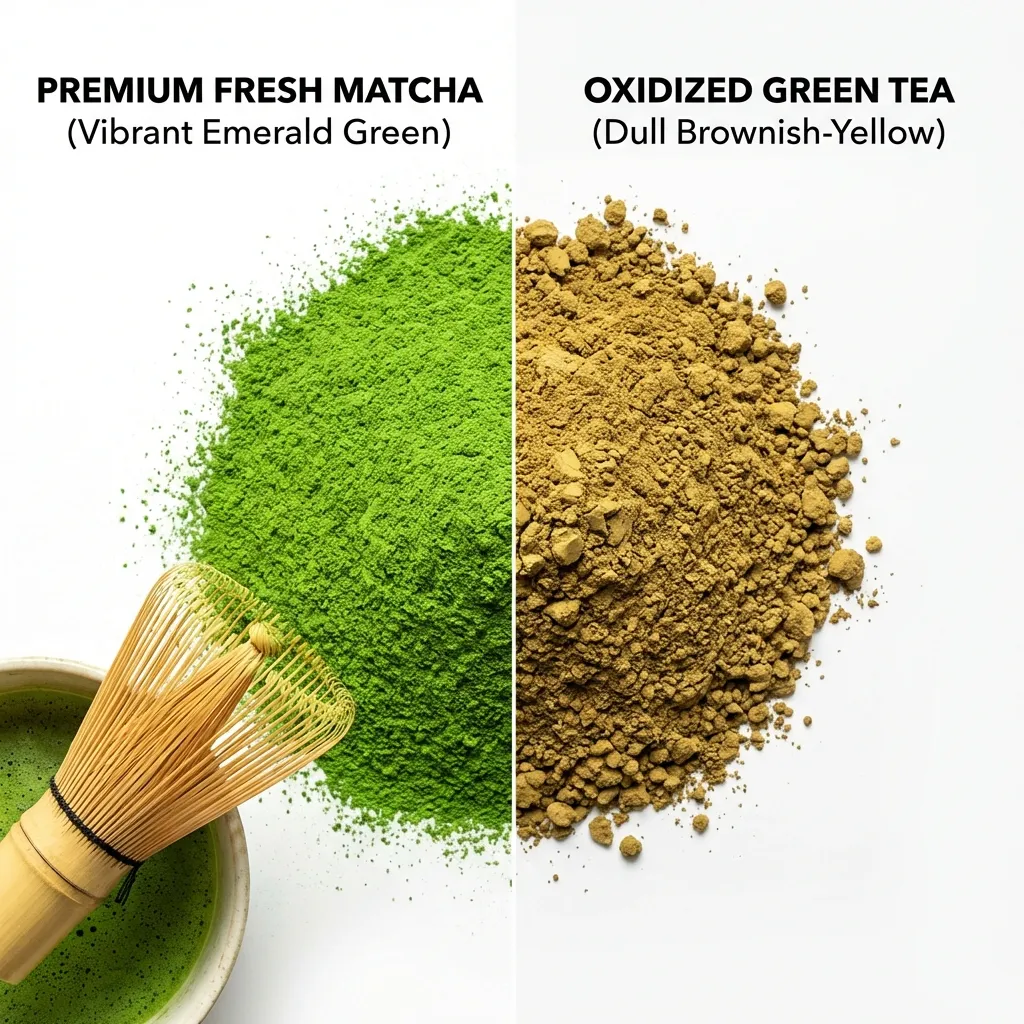
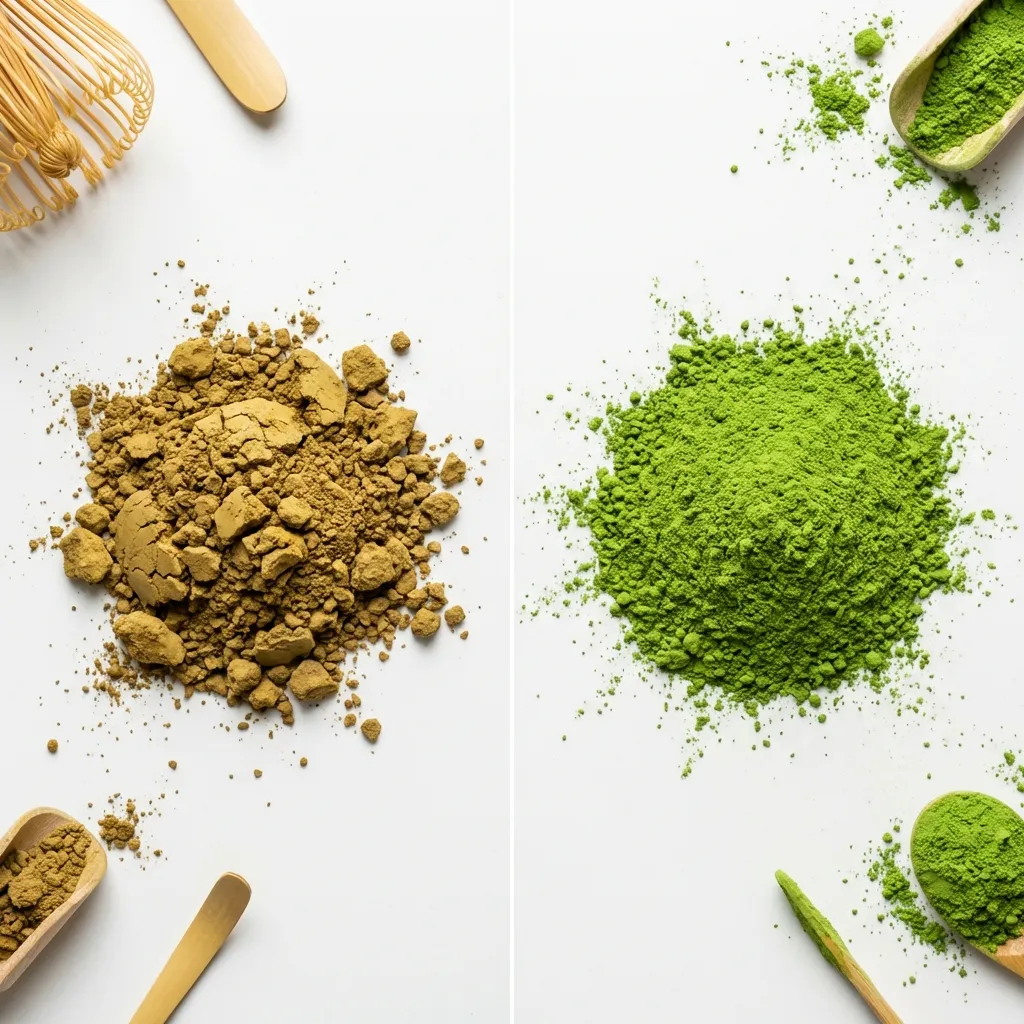
We’ve all seen those photos of electric green matcha. But sometimes, you open a tin and find a dull, yellowish-olive powder. Or worse, you brew it and it turns brown! What does the color tell us?
1. Quality & Grade
Vibrant Green = High Quality.
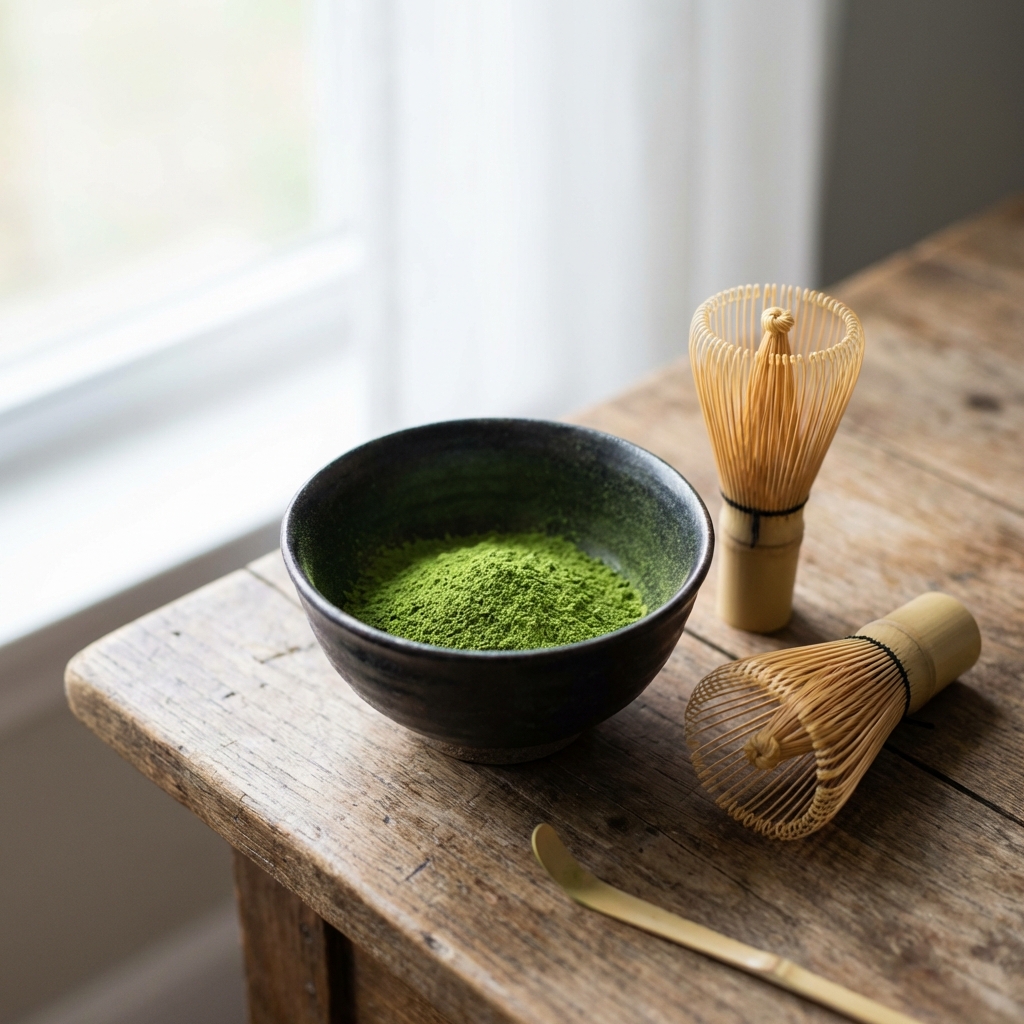
- Ceremonial Grade: Sourced from the youngest shade-grown leaves, rich in chlorophyll. This gives it a neon green color.
- Culinary Grade: Made from older leaves or leaves lower on the stem. It’s often duller, yellowish, or olive-green. This is normal for cooking grades but not ideal for drinking straight.
2. Oxidation (Old Matcha)
The biggest enemy of matcha is oxygen. When matcha is exposed to air, light, or heat, it oxidizes. The beautiful chlorophyll breaks down, and the powder turns from green to yellow, and eventually to brown—just like a dead leaf.
- Check: Look at the expiry date. If your matcha has been open for months, it’s likely oxidized.
3. Water Temperature
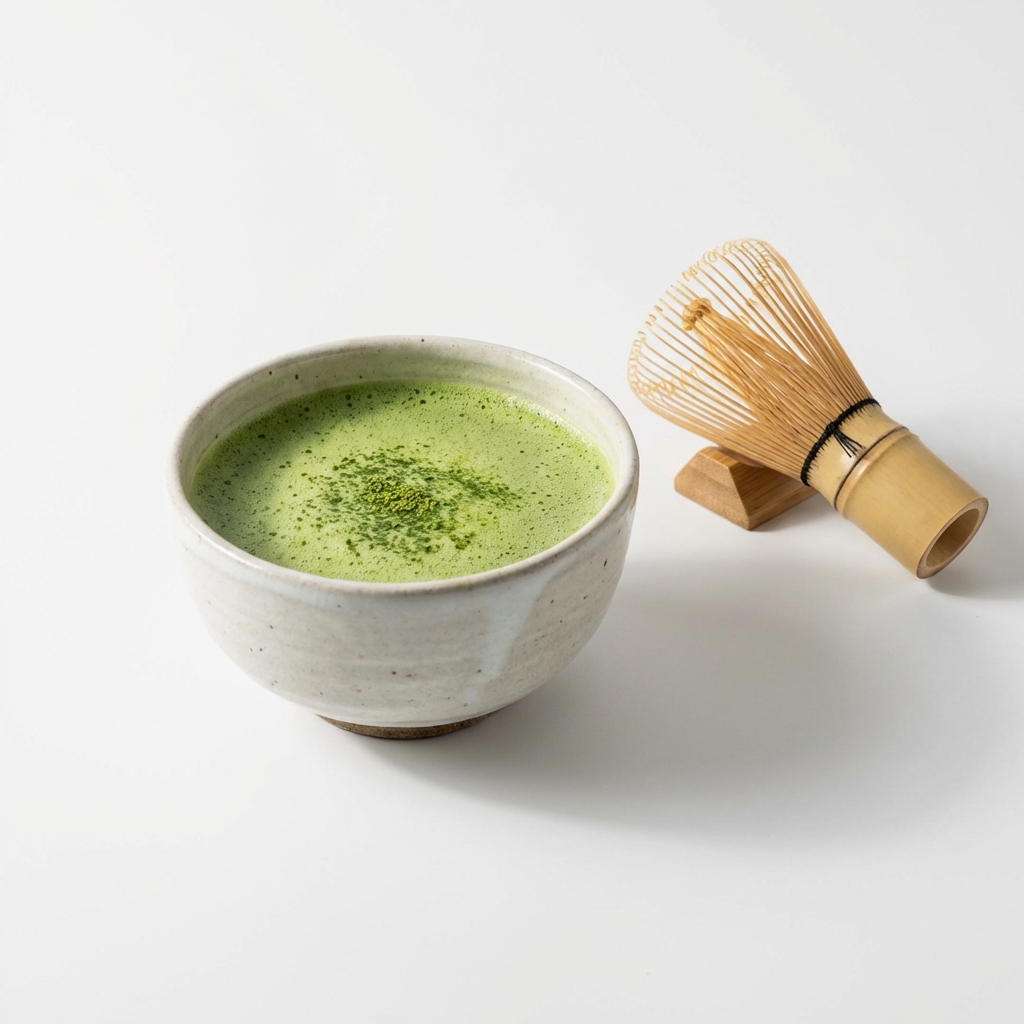
If your powder looks green but the brewed tea turns yellow/brown instantly, your water is likely too hot. Boiling water “cooks” the matcha powder, destroying the chlorophyll and ruining the fresh color (and flavor).
- Solution: Stick to 80°C (176°F) water.
4. Fake Matcha (Sencha Powder)
Sometimes, cheap “matcha” products are actually just ground-up regular green tea (Sencha). True matcha must be shade-grown and chemically distinct. Ground Sencha is often brownish-green and very bitter.
Conclusion
To ensure you get that beautiful green color:
- Buy varying reputable brands (Ceremonial grade).
- Store it in an airtight container in the fridge.
- Never use boiling water.
Color is the first indicator of flavor. If it looks dull, it probably tastes dull too!