Matcha and Anemia: A Hidden Risk? (Research-Backed Deep Dive)
Matcha is celebrated as a “Superfood” packed with antioxidants, metabolism boosters, and brain health benefits. But for some, the “potency” of matcha can be a double-edged sword, specifically regarding “Anemia” and “Iron Absorption”.
We often get asked: “Can I drink matcha if I have anemia?” or “Will drinking green tea cause nutrient deficiencies?”
In this article, we’ll dive deep into the molecular level, citing scientific research to clear up all doubts with a Data-Driven Approach.
1. The Mechanism: How Does Matcha Block Iron?
The answer lies in two key compounds: “Polyphenols” and “Tannins”.
Matcha (and green tea in general) is rich in Catechins, especially EGCG (Epigallocatechin gallate), which is fantastic for anti-aging and cancer prevention. However… EGCG has a chemical structure that loves to “bind” to iron.
The Chelation Reaction
When Catechins or Tannins meet iron in your stomach or small intestine, a reaction called Chelation occurs. This forms complex, insoluble compounds.
- The Result: Your body cannot absorb that “clump” of iron into the bloodstream, and it is eventually excreted.
2. Heme vs. Non-Heme Iron: The Critical Difference
Not all iron is affected equally. We must distinguish between the two types:
-
Heme Iron:
- Sources: Meat, poultry, fish, blood.
- Absorption: Highly absorbable (15-35%).
- Matcha Effect: “Minimal”. The heme structure protects the iron from being bound by tannins.
-
Non-Heme Iron:
- Sources: Plants, beans, tofu, eggs, grains, and most iron supplements.
- Absorption: Poorly absorbed (2-20%).
- Matcha Effect: “Significant!” This is the primary target that matcha interferes with.
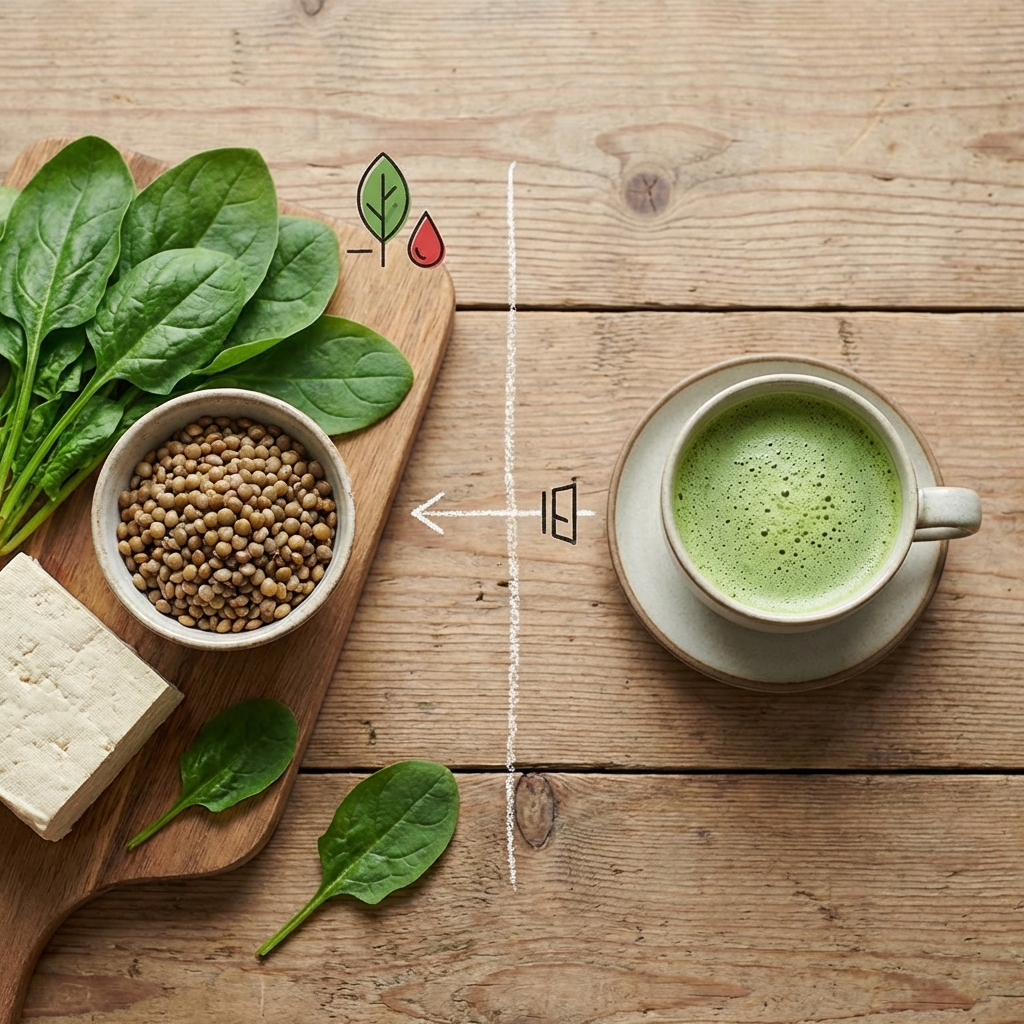
[!WARNING] Who is most at risk? Vegans and Vegetarians are at significantly higher risk because their primary source of iron is Non-Heme Iron, which is highly susceptible to matcha’s inhibitory effects.
3. The Research: How Much is Reduced?
Several studies have quantified this effect:
-
Study in the American Journal of Clinical Nutrition: Found that drinking tea with a standard meal can reduce non-heme iron absorption by 64% - 70%.
-
Tea Varieties Matter: Black tea (fermented) often has a slightly higher inhibitory effect than green tea. However, “Matcha” involves consuming the whole leaf, meaning you ingest a much higher concentration of Polyphenols—up to 3 times more than steeped tea.
- Implication: The iron-inhibiting effect of matcha could potentially exceed that 70% figure if consumed in large quantities with a meal.
4. Who Needs to Be Careful?
For healthy individuals with a balanced diet, this is “rarely a concern” as the body has sufficient iron stores. However, high-risk groups include:
- Iron Deficiency Anemia Patients: Especially those actively trying to raise iron levels.
- Pregnant Women: High iron demand for fetal development.
- Young Children: Critical growth periods.
- Vegans / Vegetarians: Relying on plant-based iron.
5. How to Drink Matcha Safely
The good news: “You don’t have to quit matcha.” You just need to adjust your “Timing”.
The 3 Golden Rules:
1. The 1-Hour Rule (Timing is Key)
This is the most effective strategy. Research shows that timing makes all the difference.
- Don’t: Drink with meals or with iron supplements.
- Do: Drink at least 1 hour before or 1-2 hours after a meal.
- Why: To allow food to leave the stomach or for iron to be absorbed before the matcha arrives.
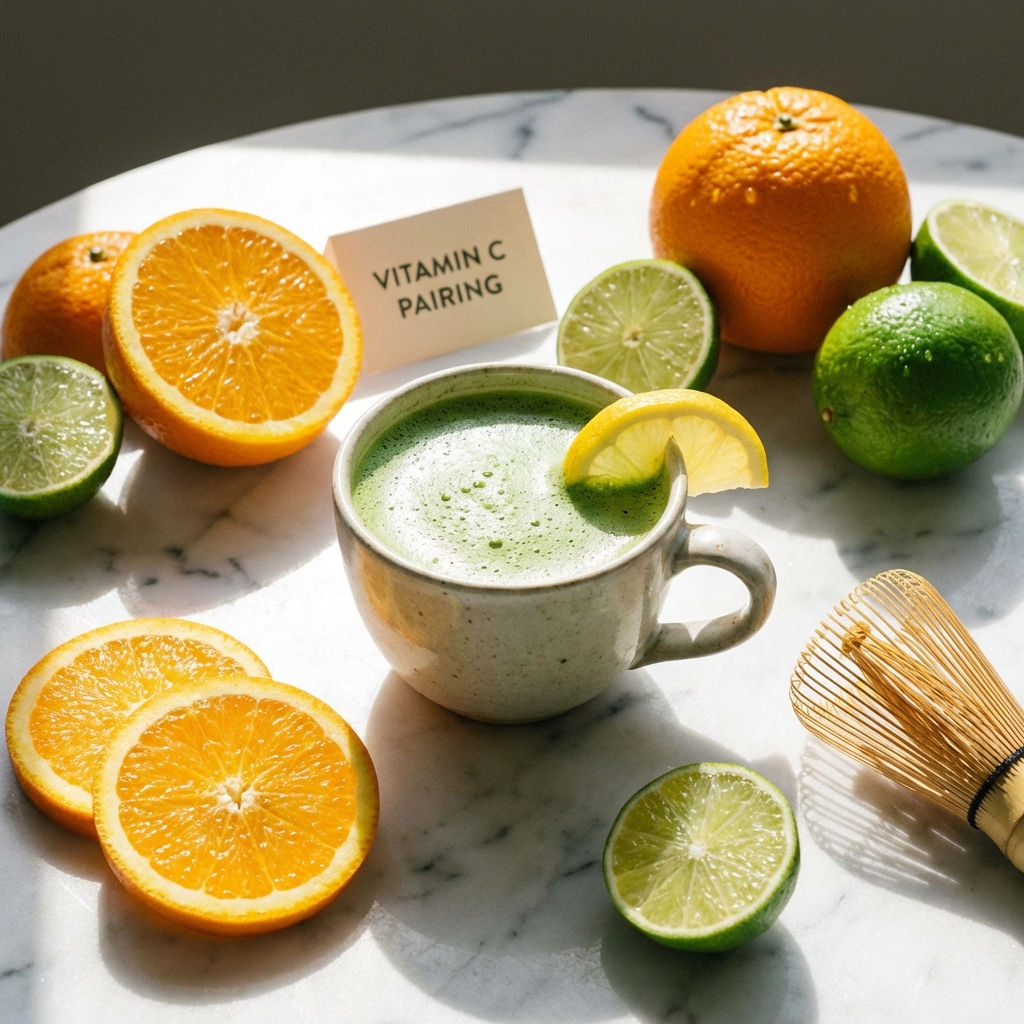
2. Vitamin C Pairing
Studies have shown that Vitamin C (Ascorbic Acid) can “rescue” iron absorption.
- Vitamin C changes iron into a more absorbable form and prevents tannins from binding to it.
- Tip: Squeeze some lemon into your matcha/water or eat citrus fruits after your meal to counteract the effect.
3. Choose Quality (Lead Concerns)
While not directly about anemia mechanisms, low-quality tea can contain Lead, which affects blood health.
- Choose Organic Matcha or Ceremonial Grade from reputable sources (Uji, Nishio) to ensure strict soil testing and minimal heavy metal contamination.
Conclusion: Balance is Everything
Matcha doesn’t cause anemia in healthy people. But for those with “low iron reserves”, drinking it incorrectly can worsen the situation.
Summary Table:
| Health Status | Recommendation |
|---|---|
| Healthy / General | Safe to drink normally (1-2 servings/day). |
| Vegan / Vegetarian | Always wait 1 hour after meals. |
| Anemic / At Risk | Must wait 2 hours after meals. NEVER drink with iron pills. |
| Pregnant | Limit to 1 cup/day and strictly separate from meals. |
Matcha is a powerful ally for health. Don’t let this scare you away—just drink smart, and you can enjoy both the tea and healthy blood levels!