The hojicha latte is the drink that converts people who think they dislike green tea. There is no grassiness and no bitterness — just a warm, toasty, caramel-sweet cup that looks like a light coffee and behaves like a decaf.
It is also one of the easiest café drinks to reproduce at home, provided you get one step in the right order.
The Café Ratio
Every good hojicha latte comes down to three numbers:
| Amount | Why | |
|---|---|---|
| Hojicha powder | 2 g (1 heaped tsp) | Less and the milk swamps it |
| Hot water | 60 ml at 90°C | Dissolves the powder before milk enters |
| Milk | 150 ml at 60–65°C | Warm enough to sweeten, not hot enough to scorch |
That is a 1:30 powder-to-water ratio for the tea base and roughly 1:2.5 tea-to-milk overall. Scale it directly for a bigger cup.
The One Rule That Matters
Whisk the powder into a small amount of hot water first. Never pour milk onto dry powder.
Milk proteins surround dry powder particles and form a skin around them. Once that happens the clump is sealed — you can whisk for a minute and it will not break down, because the water can no longer reach the powder inside. Water alone has no such problem.
This is why café baristas make a concentrate in the bottom of the cup before the milk ever appears. It is the entire technique.
Step by Step: Hot Hojicha Latte
- Sift 2 g of hojicha powder through a fine tea strainer into your cup. Hojicha powder compacts in the tin, and sifting takes ten seconds.
- Add ~20 ml of 90°C water and stir into a smooth paste. Look for a glossy surface with no dry patches at the edges.
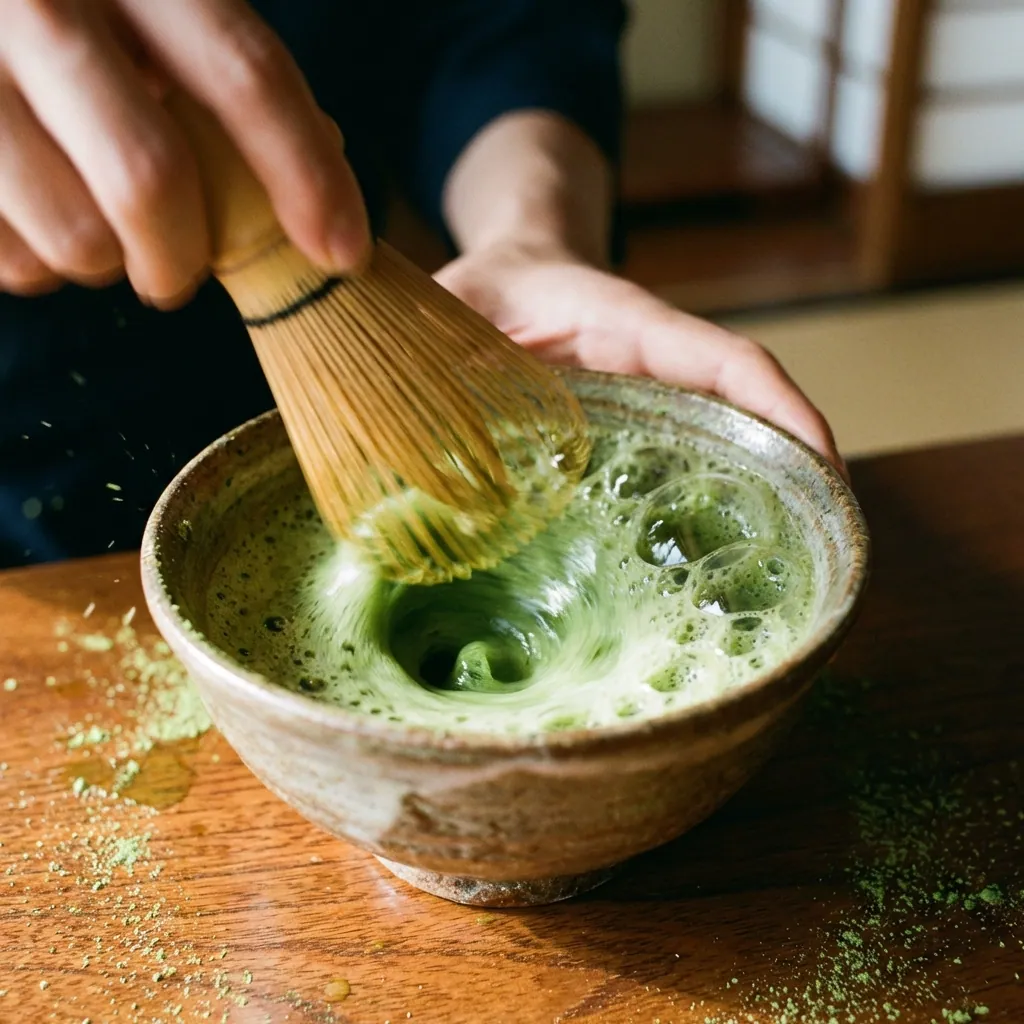
- Add the remaining ~40 ml and whisk briskly in an M-shape for 15–20 seconds. A fine foam should form.
- Heat 150 ml of milk to 60–65°C and froth it. Above 70°C the lactose scorches and produces a flat, boiled note that fights the tea’s own caramel.
- Pour the milk down the side of the cup, then spoon the foam on top.
Taste before you sweeten. Roasting creates genuine caramel compounds, and good hojicha frequently needs nothing.
On temperature
Unlike matcha, hojicha does not punish you for hot water. Matcha needs 70–80°C because higher temperatures pull harsh catechins out of the unroasted leaf. Hojicha has already been through 200°C in the roaster — those compounds are long gone. So 90°C is comfortable, and even boiling water will not ruin it.
Iced Hojicha Latte
The mistake with iced versions is making the tea at normal strength and then watching ice and cold milk dilute it into beige water. Compensate up front:
- Double the powder to 4 g, but use only 40 ml of hot water. You are making a concentrate, not a drink.
- Whisk it smooth, then let it cool for a minute.
- Fill a tall glass with ice and pour in 150 ml of cold milk.
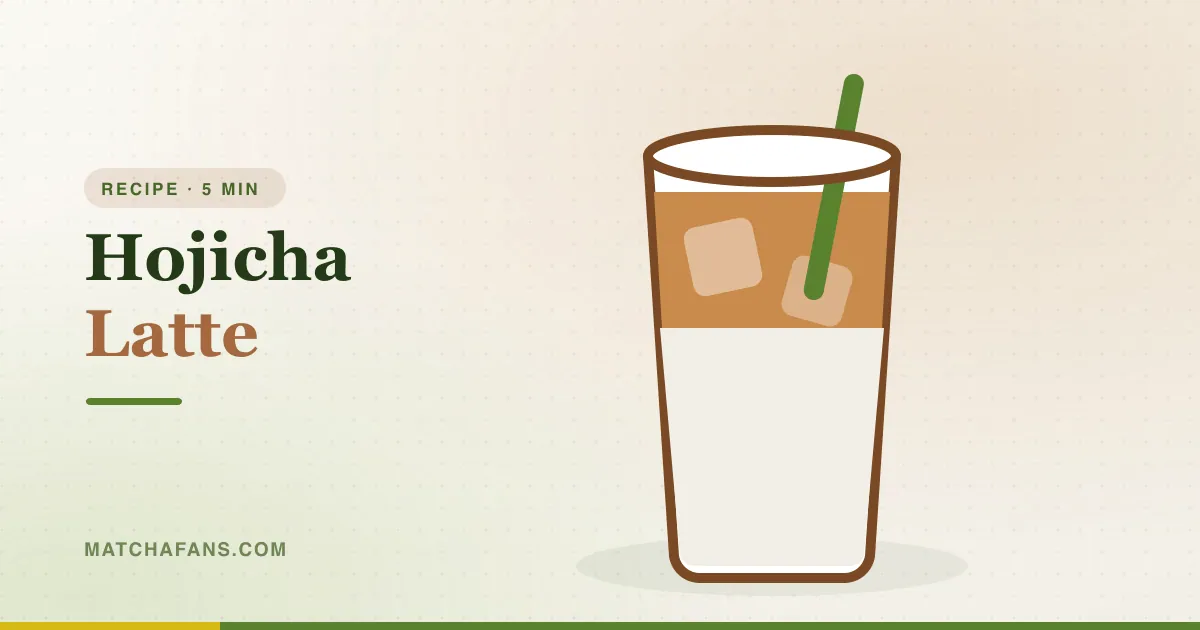
- Pour the concentrate slowly over the back of a spoon so it settles in a distinct amber layer on top of the white milk.
- Stir before drinking — the layers are for the photo, not the flavour.
For a sweetened version, brown sugar syrup suits hojicha far better than white sugar; its molasses edge sits in the same flavour family as the roast.
Choosing Milk
| Milk | Verdict |
|---|---|
| Oat | Best match. Toasted-grain sweetness reinforces the roast; body is right. |
| Whole dairy | Creamiest mouthfeel, but slightly mutes the aroma. |
| Soy | Good body, adds a beany note some people like and others don’t. |
| Almond | Weakest. Too thin, and the nuttiness competes with the roast. |
| Coconut | Works if you want dessert; the coconut takes over. |
Hojicha Latte vs Matcha Latte
| Hojicha latte | Matcha latte | |
|---|---|---|
| Colour | Amber / light brown | Vivid green |
| Flavour | Toasty, caramel, no bitterness | Grassy umami, creamy, slight bitterness |
| Caffeine | 15–30 mg | 35–70 mg |
| Best time | Evening, after meals | Morning, early afternoon |
| Sugar needed | Usually none | Often a little |
| Beginner-friendly | Very | Depends on the grade |
If you want the deeper comparison — production, antioxidants, price — read hojicha vs matcha. And if energy is the goal rather than a wind-down, the matcha latte method is the one you want.
Troubleshooting
It tastes watery. Not enough powder, or too much milk. Go to 3 g of powder before you cut the milk — hojicha is light-bodied by nature and needs a little more mass than matcha to hold its own.
It’s gritty at the bottom. You did not sift. Hojicha powder is ground coarser than ceremonial matcha, so it settles faster and clumps harder in the tin.
It tastes bitter. Unusual for hojicha, and almost never the water temperature. Check the powder’s age: stale roasted tea turns sharp and papery. Hojicha keeps its aroma for about 3–4 months after opening; store it airtight and away from light, the same way you store matcha.
The foam collapses instantly. Milk was too hot. Above 70°C the protein structure that holds foam denatures. Aim for 60–65°C — hot to the touch on the outside of the jug, but you can still hold it.
What to Buy
You need hojicha powder, not loose leaf, for a proper latte — though loose leaf makes an excellent lighter version if you steep a strong concentrate first. Grades, prices, and which brands are worth importing are covered in our hojicha powder buying guide.
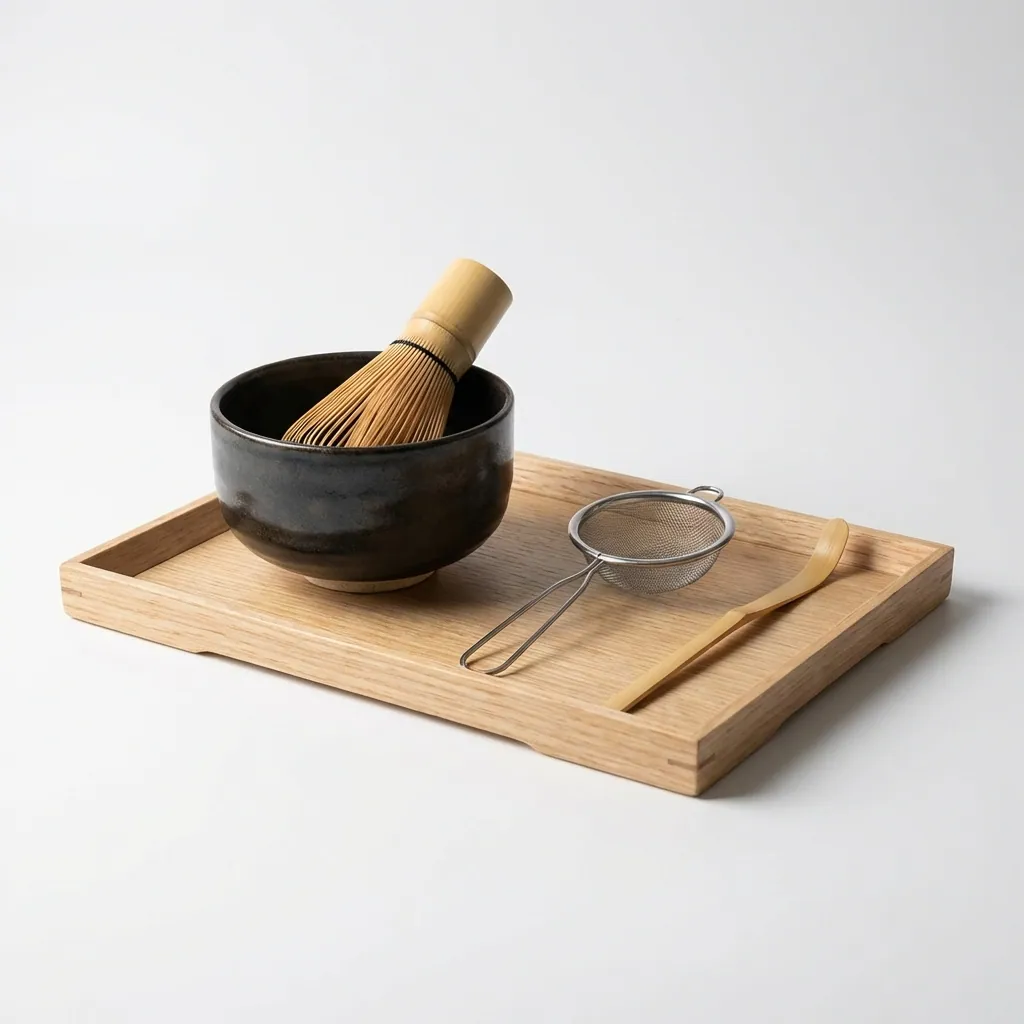
A cheap milk frother wand (around $10) does 90% of what a bamboo chasen does for this particular drink. Save the chasen for matcha, where foam quality genuinely changes the taste.