If you have been told hojicha is “the caffeine-free one,” that is close to the truth but not quite it. Hojicha does contain caffeine — there is simply so little of it that the tea behaves, practically speaking, like a decaf drink for most people.
Here are the real numbers, where they come from, and how to use them to decide how late in the day you can pour a cup.
How Much Caffeine Is in Hojicha?
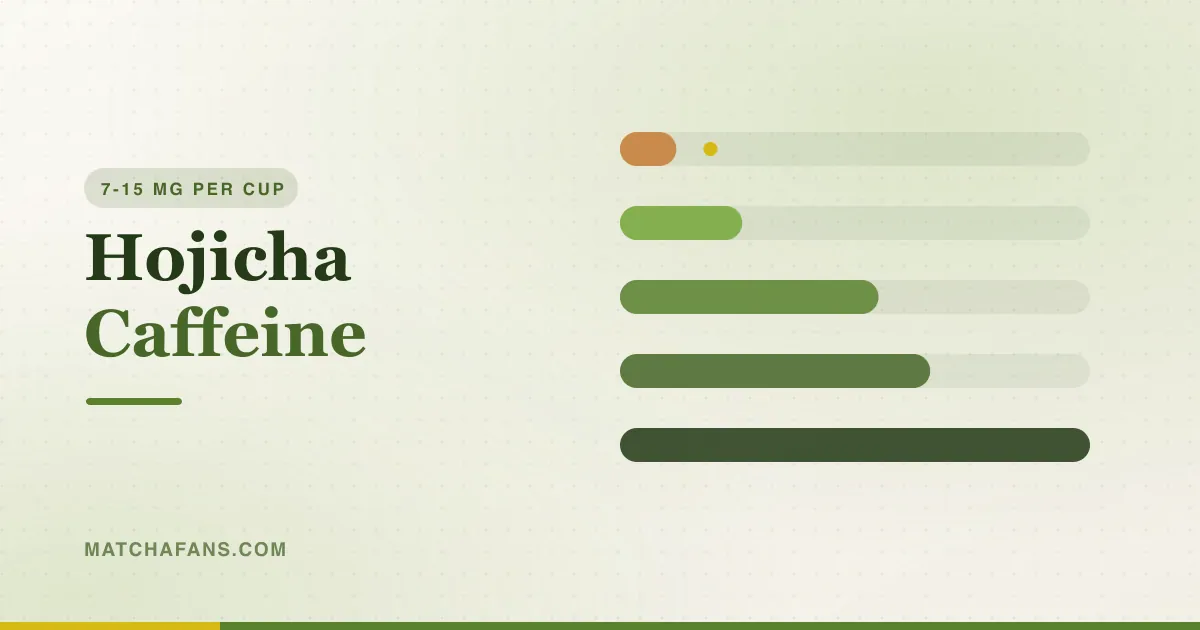
A standard 200 ml cup of loose-leaf hojicha contains roughly 7–15 mg of caffeine. The spread depends on three things: how much leaf you use, how long you steep it, and whether the tea is stem-heavy (kuki-hojicha, lower) or leaf-heavy (slightly higher).
To put that in context: you would need to drink somewhere between six and thirteen cups of hojicha to match one mug of drip coffee.
The chart at the top of this page shows how hojicha sits against the rest of the Japanese tea shelf. The short version is that hojicha is the lowest-caffeine tea you will normally be offered, with only mugicha — which is barley, not tea — coming in lower at zero.
Why Roasting Removes the Caffeine
The reason is straightforward chemistry. Caffeine sublimates — passes directly from solid to vapour — at around 178°C. Hojicha is made by roasting bancha, sencha, or kukicha at roughly 200°C.
So for the several minutes the leaves spend in the roaster, a meaningful share of the caffeine simply leaves. The same heat drives the other changes hojicha is known for: chlorophyll breaks down (green turns reddish-brown), catechins degrade (the astringency disappears), and pyrazines form (that toasty, caramel, almost coffee-like aroma).
There is a second reason the number is low before roasting even begins. Caffeine concentrates in the youngest leaves at the top of the plant, and shading pushes it higher still. Matcha uses exactly those leaves, shaded for three to four weeks. Hojicha uses the opposite: mature, sun-grown, late-harvest leaves and stems, which start out lower in caffeine. Roasting then takes a second bite out of what remains.
For the full picture of how the two teas diverge, see our hojicha vs matcha comparison.
Hojicha Caffeine vs Coffee
| Drink | Serving | Caffeine | vs. hojicha |
|---|---|---|---|
| Hojicha | 200 ml cup | 7–15 mg | — |
| Hojicha powder (whisked) | ~2 g | 15–25 mg | ~2x |
| Espresso | 30 ml shot | ~63 mg | ~6x |
| Drip coffee | 240 ml mug | ~95 mg | ~9x |
| Cold brew coffee | 350 ml | 150–200 mg | ~15x |
The comparison people find most useful in practice: a cup of hojicha carries about as much caffeine as a 50 g bar of dark chocolate, or about half a can of cola. That is the mental model to hold — not “tea,” but “roughly a chocolate bar’s worth.”
Hojicha Powder Has More Caffeine Than You Think
This is the detail most articles get wrong. There are two completely different ways to drink hojicha:
- Steeped loose leaf. You pour hot water through the leaves, drink the infusion, and throw the leaves away. Only what dissolves ends up in your cup: 7–15 mg.
- Whisked powder. The roasted leaves are stone-ground, and you consume every particle — exactly like matcha. Nothing is left behind, so you get 15–25 mg per 2 g serving.
That is why a café hojicha latte is not automatically as gentle as a pot of hojicha at home. It usually is not: most cafés use powder because it survives being mixed with cold milk. Still low — but roughly double.
If you are buying powder to make lattes, our hojicha powder guide covers grades, brands, and what to look for.
How Late Can You Drink Hojicha?
Caffeine has a half-life of about 5 hours in a typical adult. Work through what that actually means for hojicha:
- You drink a cup at 8 PM: roughly 10 mg enters your system.
- By 1 AM, about 5 mg remains.
- By 6 AM, about 2.5 mg.
Sleep researchers generally treat 100 mg in the evening as the threshold where sleep architecture measurably suffers. Hojicha does not come close, which is why the after-dinner cup is a genuine Japanese habit rather than a marketing story.
Practical rule: if you can eat dark chocolate after dinner without it affecting your sleep, hojicha will not affect it either. If chocolate does keep you up, stop your hojicha 3 hours before bed and steep it for only 30 seconds.
Who Should Still Be Careful
Hojicha is one of the safest caffeinated drinks there is, but “low” is not “none”:
- Highly caffeine-sensitive people. A minority of adults metabolise caffeine slowly due to a CYP1A2 gene variant. If 30 mg is enough to make you jittery, start with half a cup.
- Anyone with iron-deficiency anemia. This is about tannins, not caffeine. Tea tannins bind non-heme iron and reduce absorption, so leave at least an hour between hojicha and an iron-rich meal or supplement.
- Toddlers under about 4. Japanese families serve hojicha to children, but young children are small; dilute it and keep servings modest.
- Pregnancy. The usual guidance is under 200 mg of caffeine per day from all sources. One cup of hojicha uses less than 10% of that budget, but confirm your own limit with your doctor.
Getting the Caffeine Lower (or Higher)
You have more control than you might expect:
- To extract less: steep for 30 seconds rather than 2–3 minutes, use less leaf, and choose kuki-hojicha (stem-heavy), which is naturally the lowest-caffeine version.
- To extract a little more: use powder instead of loose leaf, or steep longer. Because hojicha shrugs off near-boiling water without turning bitter, a longer steep costs you nothing in flavour — unlike sencha or matcha, which needs 70–80°C.
- To reach actual zero: switch to mugicha (roasted barley) — same toasty character, no caffeine at all, because it is not made from the tea plant.
The Bottom Line
Hojicha has caffeine: 7–15 mg per cup, or 15–25 mg if you are drinking whisked powder. That is roughly one-ninth of a mug of coffee and about one-fifth of a serving of matcha.
The practical translation: matcha for the morning when you want L-theanine-backed focus, hojicha for the evening when you want the ritual without the alertness. Most people who keep both at home end up using them exactly that way.